Owners often expect a repaint for a mark that only needs polishing, or a polish for a scratch that has gone down to bare metal. Both mistakes cost money: the first on work you did not need, the second on rust that shows up months later. I have run our garage for 37 years, and the check below is one you can learn to do yourself.
What layers is car paint made of?
Car paint is a stack of thin layers on top of the metal or plastic panel. From the bottom up, a typical modern car has:
- The panel itself, steel, aluminium or plastic.
- A protective coating applied at the factory to resist rust.
- Primer, usually white, grey or a dull shade, which helps the colour stick and fills tiny marks.
- Base coat, the colour you see.
- Clear coat, a transparent top layer that gives the shine and takes most of the day-to-day wear.
All of these together are thinner than most people expect. The clear coat on its own is thinner than a sheet of paper. That is why a scratch that looks shallow can still reach the colour, and why a panel can only be polished a limited number of times before the clear coat wears through.
How does the fingernail test work?
Clean the area first, because dust in the scratch can fool you. Then drag a fingernail slowly across the scratch at a right angle to it.
- The nail glides over without catching. The scratch is most likely in the clear coat only. Polishing has a good chance of removing it or making it very hard to see.
- The nail catches slightly. The scratch is at or just past the bottom of the clear coat. Polishing may soften it, but a repair with paint is often needed for it to disappear.
- The nail drops into a groove. The scratch has cut into the colour or deeper. That area needs paint.
The test is not perfect, but it is a good first check before you send a photo to any garage.
What do the different depths of scratch look like?
Clear coat scuffs
These look like a hazy, lighter line, often visible only at certain angles. When you wet the area with a little water, a clear coat scuff often disappears for a moment, because the water fills the tiny groove. That is a good sign it can be polished out.
Scratches into the colour
The scratch looks like a line of a slightly different shade than the paint around it. It does not vanish when wet. On metallic colours it may look darker or duller than the surrounding paint because the flakes have been disturbed.
Scratches down to primer
You see a white, light grey or dull line at the bottom. That is primer. The colour layer has been cut, so the area needs paint. Leaving primer exposed is less risky than bare metal, but primer is not designed to face sun and rain, and it will break down over time.
Scratches down to bare metal
The groove shows shiny silver, or brown if rust has already started. This is the one to fix soon. Exposed steel rusts when it gets wet, and rust can spread under the paint around the scratch, lifting it in bubbles. On a plastic bumper, the bottom of a deep scratch shows black or grey plastic instead.
When does polishing fix a scratch?
Machine polishing uses a fine abrasive compound to remove a very thin layer of clear coat around the scratch. When the edges of the scratch are brought level with its bottom, light reflects evenly again and the line disappears. It works well on light scuffs, swirl marks from rough washing and paint transferred from another car or a pillar in a parking lot.
Because polishing removes a little clear coat each time, it is not something to do every month on the same spot. A painter should check how much clear coat is left before polishing hard. If a scratch only needs polishing, we tell the customer so and polish it instead of painting, since that keeps more of the original factory finish on the car.
If you try polishing at home, work on a cool panel in the shade, use light pressure and a clean microfibre pad, and stop once the scratch fades. Going further only removes clear coat that cannot be put back. Hand polishing can soften very light marks, while a machine polisher gives a more even result across the whole panel.
When does a scratch need paint?
A scratch needs paint when the colour layer has been cut. The repair usually involves sanding the damaged area smooth, applying primer where needed, spraying the colour and finishing with clear coat. To stop the repair from standing out, the new colour is faded into the surrounding paint, and at our garage we blend into the next panel when the colour calls for it. We tell the customer about blending before we do it, because it adds time.
The painting is done in our own paint booth. The booth keeps dust and wind away from the wet paint, which matters because a speck of dust in fresh clear coat shows as a small bump in the finish.
Is it a scratch or a dent?
Many scratches come with a dent underneath, especially from a scooter handle, a gate or a reversing bump. A dent changes the repair from painting only to denting and painting, and it changes the price. Two quick checks help:
- Look along the panel. Crouch so your eye is level with the panel and look along it toward a light. A dent shows up as a shadow or a dip.
- Watch a reflection. Find the reflection of a straight line on the panel, such as a tube light, a building edge or a door frame. Move your head slowly. If the line bends or wobbles as it passes over the scratch, the metal underneath has moved.
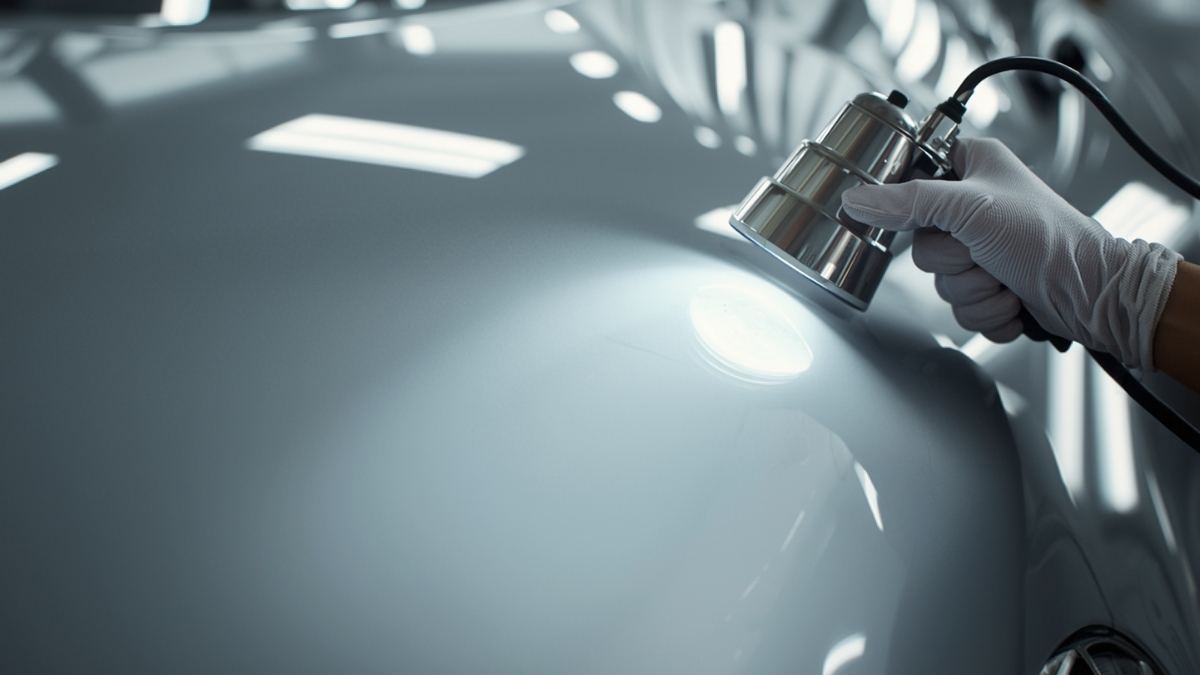
Under a bright, even light, even shallow dents show clearly. If there is a dent, the metal is brought back to shape first, and only then is the area prepared for paint. Painting over a dent without fixing it leaves a panel that looks glossy but still wavy. You can read more about the process on our denting service page.
Do touch-up pens and DIY kits work?
Touch-up pens are useful for one job: sealing a small stone chip so bare metal is not exposed to rain. For that, they are fine as a temporary fix.
For longer scratches, pens tend to leave a raised line of paint that catches the light and looks worse than the scratch. The colour from a pen also rarely matches aged paint closely. Scratch removal liquids sold for home use are mostly mild polishes. They can help with light clear coat scuffs and do nothing for scratches into the colour.
If you have already used a pen or filler on a scratch, tell the garage. The DIY layer usually has to be sanded off before a proper repair, which adds a little work.
What about scratches on plastic bumpers?
Bumpers take most of the small scrapes in city driving. Two things are different about them.
First, a lot of what looks like a scratch on a bumper is paint transferred from another car, a wall or a pillar. It sits on top of your paint. Polishing or a gentle compound often removes it completely, and the bumper underneath is fine.
Second, when a bumper does need paint, plastic needs a different primer so the paint grips and flexes with the bumper. A cracked bumper may need the crack repaired from behind before painting. Bumpers with parking sensors need the sensors handled carefully so they keep working after the job.
Why do exposed scratches matter more in Chennai?
Chennai's weather is hard on bare metal. The humidity stays high for much of the year, the northeast monsoon brings heavy rain in the last months of the year, and neighbourhoods like Mylapore sit close to the sea, where the air carries salt. Moisture and salt together speed up rust on any steel that is exposed. A scratch down to metal that might stay stable for a long time in a dry city can start to rust much sooner here.
We covered weather damage in more detail in our guide to car paint protection in Chennai.
What happens if you leave a scratch unrepaired?
It depends on how deep it is. A clear coat scuff can stay as it is for years without getting worse, and it is a cosmetic choice whether to polish it.
A scratch into the colour or primer gets slowly worse. Water and dirt collect in the groove, the edges of the paint dry out in the sun, and small flakes can start lifting along the line. The repair area grows with it.
A scratch down to bare metal is the one that costs more the longer it waits. Rust starts in the groove and creeps sideways under the good paint, so a thin line can turn into a wider patch of bubbling paint after a monsoon or two. At that stage, the rust has to be ground out and treated before primer and paint, and the repaired area is larger than the original scratch. If you cannot get it painted soon, seal the metal with a touch-up pen as a stopgap.
How do I photograph a scratch for a quote?
Good photos save a trip. For a WhatsApp quote, send:
- One photo from a few steps back so the whole panel is in frame
- One close-up of the scratch, taken at a slight angle so the depth shows
- Your car model and year in the message
Daylight works best, since flash can flatten a scratch and hide a dent. From photos we can tell you whether it looks like polish or paint and give a rough figure. The written estimate comes after we see the car, and nothing is done without your okay. For how prices are worked out, see what decides car denting and painting cost in Chennai.
Send it to us: WhatsApp your scratch photos to +91 99419 51161, or visit Yours Automobile on Rangaiah Garden Street, Mylapore. Hours and directions are on the contact page. If a scratch turns out to hide a dent, see what a doorstep mechanic can and can't do that a paint booth can before booking a home visit for it.
Frequently asked questions
Can polishing remove any car scratch?
No. Polishing works on scratches that sit in the clear coat, the transparent top layer. If a scratch has reached the colour, primer or bare metal, polishing can soften how it looks but cannot remove it, and the area needs paint.
What does a white line inside a scratch mean?
On most cars, a white or light grey line at the bottom of a scratch is primer showing through. That means the colour layer has been cut, and the scratch needs paint rather than polish.
Are touch-up pens a good fix for scratches?
For a small stone chip, a touch-up pen can seal the metal until a proper repair. For a long scratch, pens usually leave a raised line of paint that is easy to see and has to be sanded off later.
How do I tell if there is a dent under a scratch?
Look along the panel at a low angle toward a light, or watch the reflection of a straight line such as a tube light. If the reflection bends or wobbles over the scratch, the metal underneath has moved and the repair will need denting as well as paint.